

When someone picks up one of our holsters and says, “Man, that edge feels amazing,” we know our sanding was spot on.
At Gear For Patriots, sanding is a critical part of the build, not just for looks, but for durability, comfort, and feel. It’s one of those steps that separates a handcrafted piece from something mass-produced. To get our edges dialed in just right, we rely on a mix of leatherworking tools that give us control and consistency.
🔸 Hand Sanding Blocks
We still believe in the basics. Our hand sanding blocks are used throughout the build process. We use a range of grits to shape and smooth the leather. This step helps fine tune and lays the foundation for great edge finishes later. It’s slower, but the control and feel are second to none.
🔸 Oscillating Spindle Sander
For inside curves and tight contours, nothing beats the oscillating spindle sander. It gives us even pressure and a consistent finish, especially on holsters with tight curves or hard-to-reach details. It’s a shop workhorse that helps us knock down high spots and prep edges for burnishing or paint.
🔸 Belt Grinder
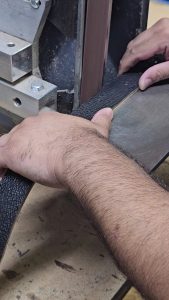
While belt grinders are more commonly associated with knife making, they’re a secret weapon in our leather shop. When used with the right touch, they give us perfect, crisp edges on thick leather and exotics. We use it to bevel, flatten, and even out layered builds like gun belts, mag pouches, and reinforced holsters. Fast, powerful, and extremely precise when dialed in. Here you can see AJ using our belt grinder to smooth out the 3 layers of this shark belt.
🔸 Precision Dremel Work
To finish it all off, we go in with a variable-speed Dremel fitted with mini sanding drums. It helps us reach tight areas like belt loops or between curved layers. The Dremel ensures a flawless finish on every angle.
🛠 Why It Matters
Edges aren’t just for looks. A clean edge wears better, feels better, and shows that care was put into the build. These leatherworking tools help us take raw leather and give it a fit and finish worthy of the person wearing it. From rough cut to refined edge, it’s all part of the process.
Next in our Meet the Tools series: Edgers: where smooth becomes sculpted, and sharp corners become clean lines.